
Printed Solar
Solar power,
printed.
Lightweight, flexible Printed Solar expands where solar can go.
- 2018 first commercial-scale roof
- 2020 a curved public canopy
- 2024–25 on a stadium world tour
- Research lineage Newcastle, since 1996
01 In the hand
Flexible by design.
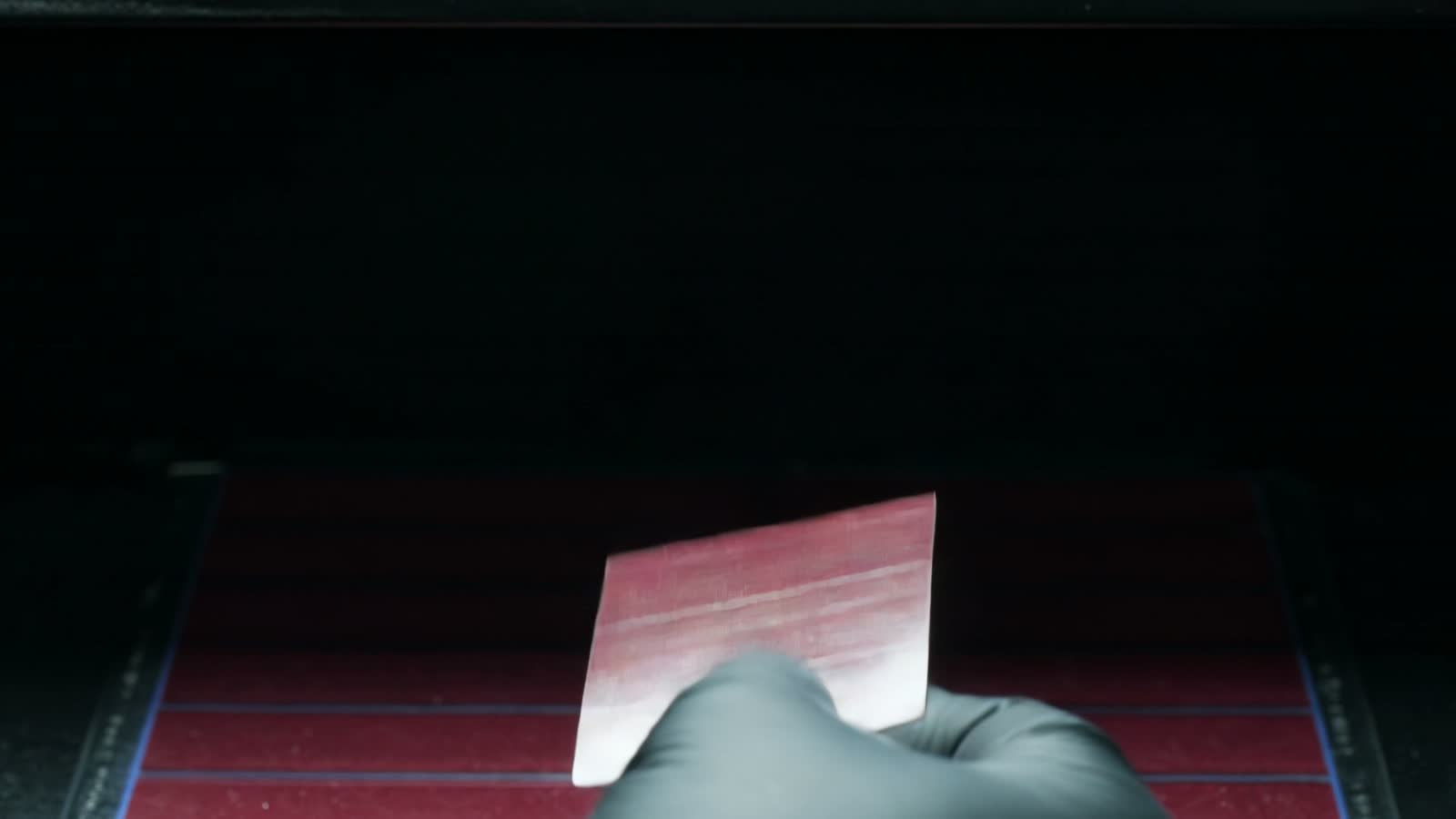
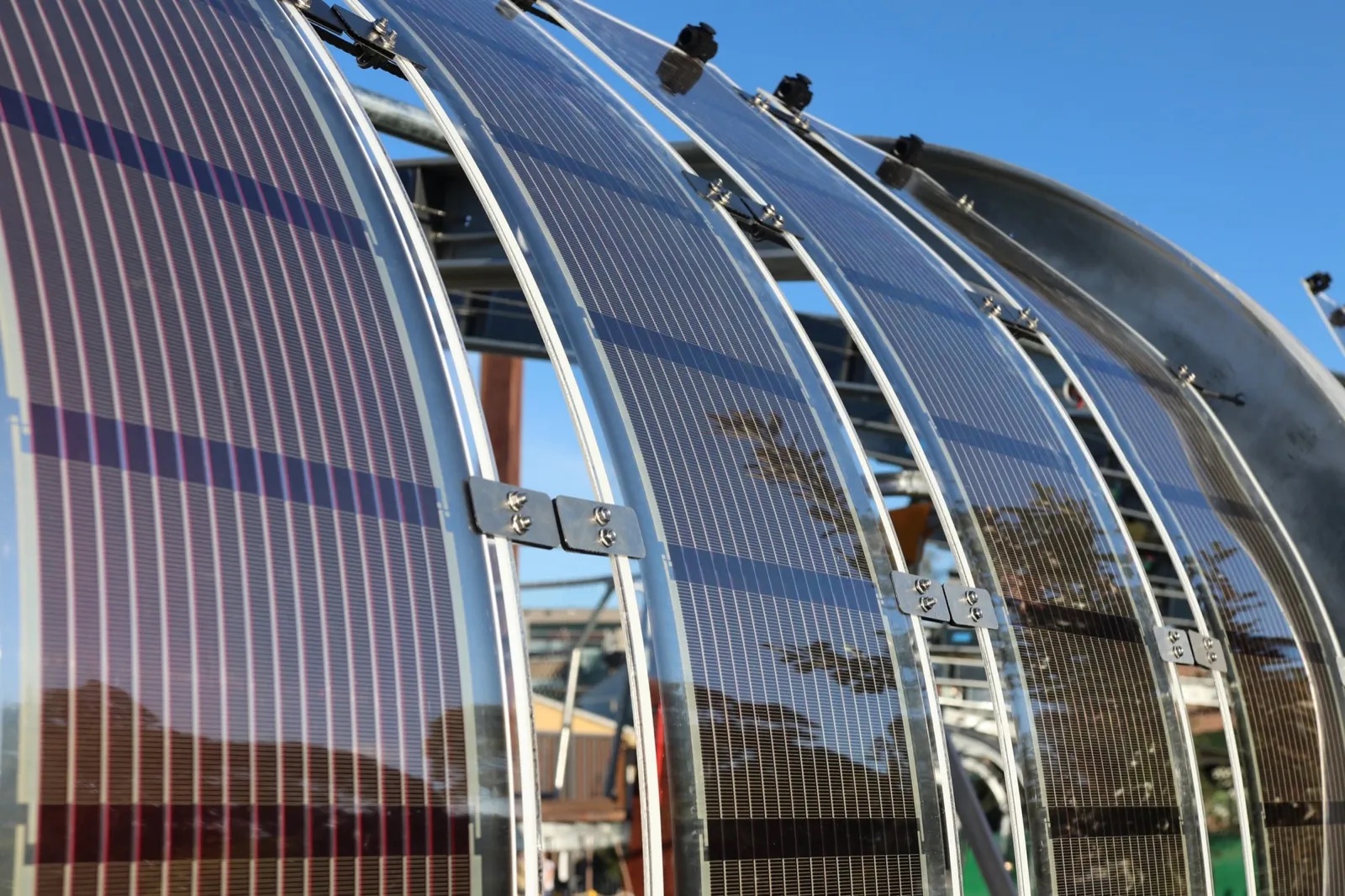
Highly flexible, Printed Solar follows curved shapes and contours, opening up more surfaces for solar generation. It supports long-term installations as well as temporary projects that can be packed down and redeployed.
At just 300 g per square metre, Printed Solar opens up new possibilities for where and how we generate clean energy.
02 What it is
Five printed layers on a plastic substrate.
Printed Solar turns light into electricity using organic photovoltaic materials. Five printed layers sit between a flexible plastic substrate and an encapsulant that keeps out moisture and oxygen. The formulations and device design draw on work by Kardinia and the University of Newcastle.
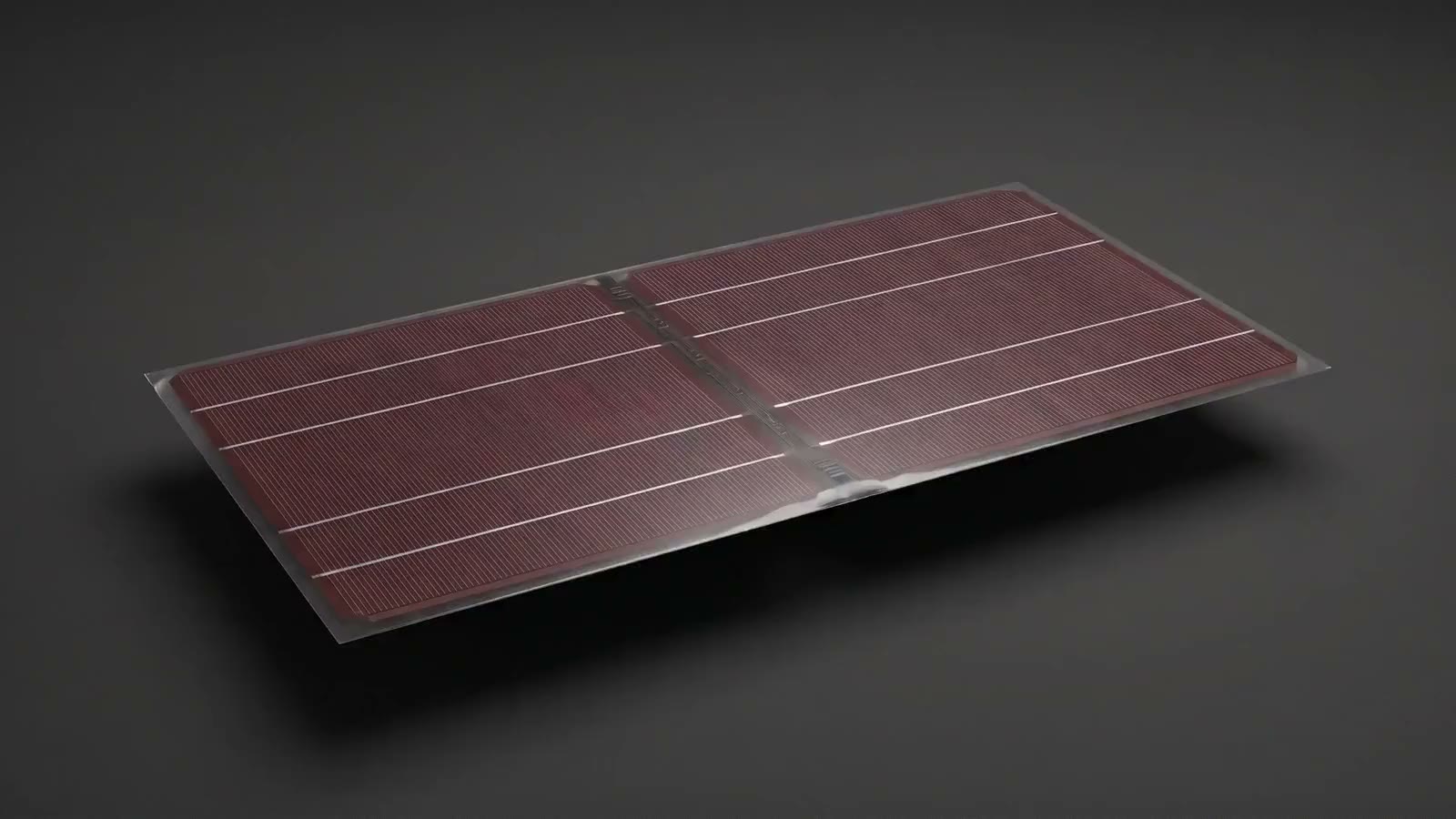
Scroll to open the layers. Simplified, not to scale.
-
01
EncapsulantThe barrier against moisture and oxygen.
-
02
Transparent electrodeLets light in and current out.
-
03
Charge transportSteers one type of charge, blocks the other.
-
04
Organic active layerWhere light becomes current.
-
05
Charge transportWorks with the other charge-transport layer to direct charge through the cell.
-
06
Printed metal electrodeThe fine silver lines you can see.
-
07
Flexible plastic substrateCarries the stack through the press.
03 How it is made
From photovoltaic inks to working solar.
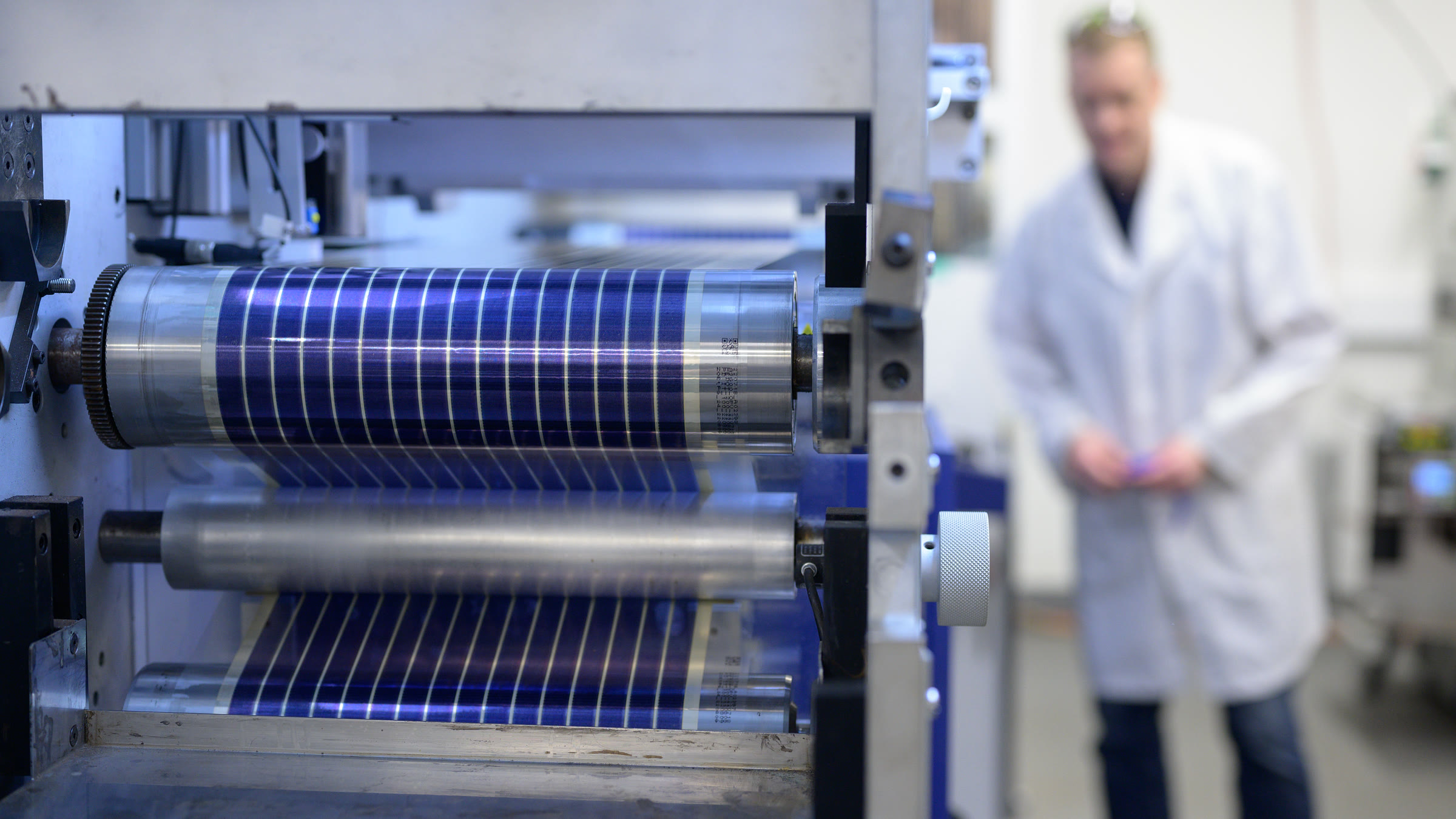
Printed Solar brings together photovoltaic materials, roll-to-roll manufacturing and electrical testing to turn flexible plastic film into an energy-generating surface.
A
Materials
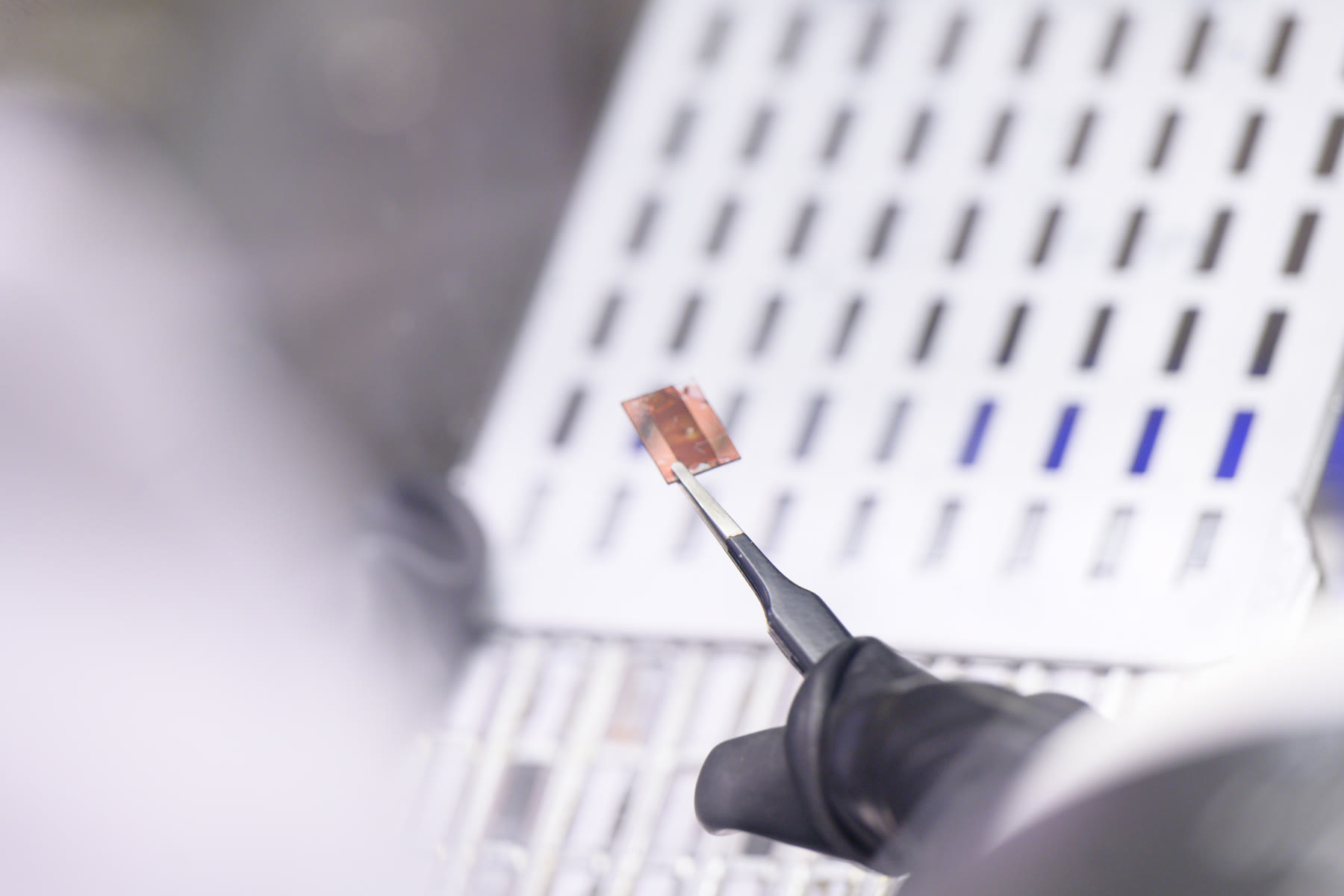
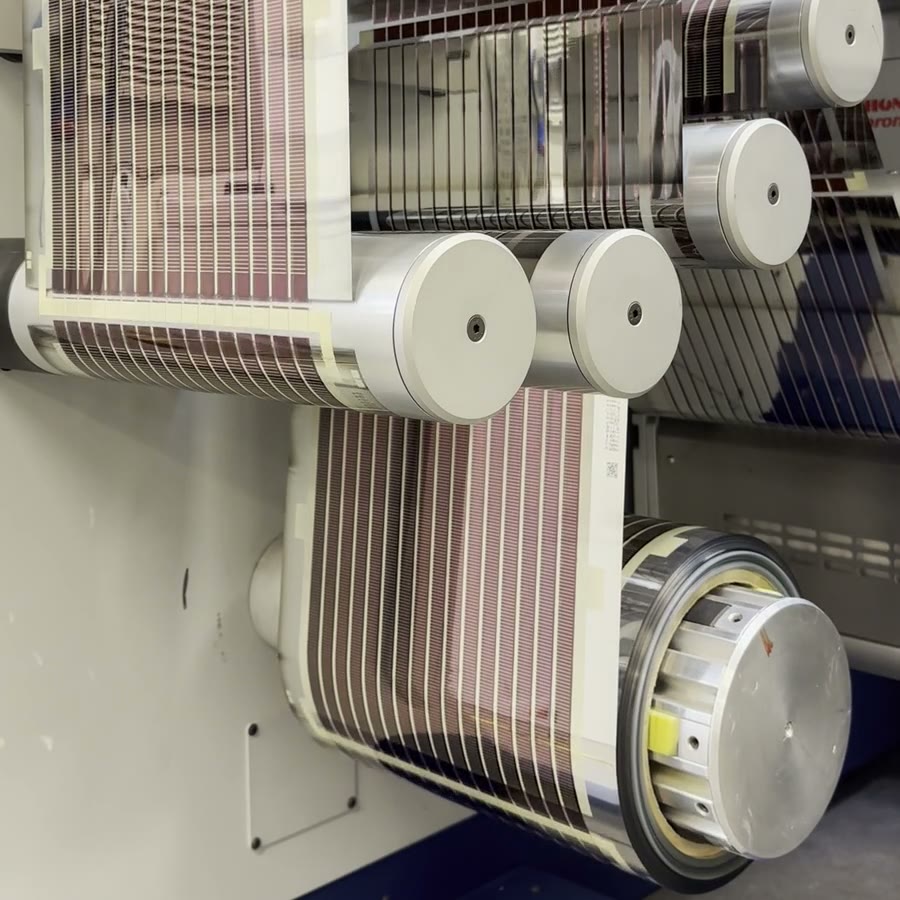
Photovoltaic inks form the thin functional layers that absorb light and collect charge. We develop and evaluate material systems to improve power output and service life.
B
Manufacturing
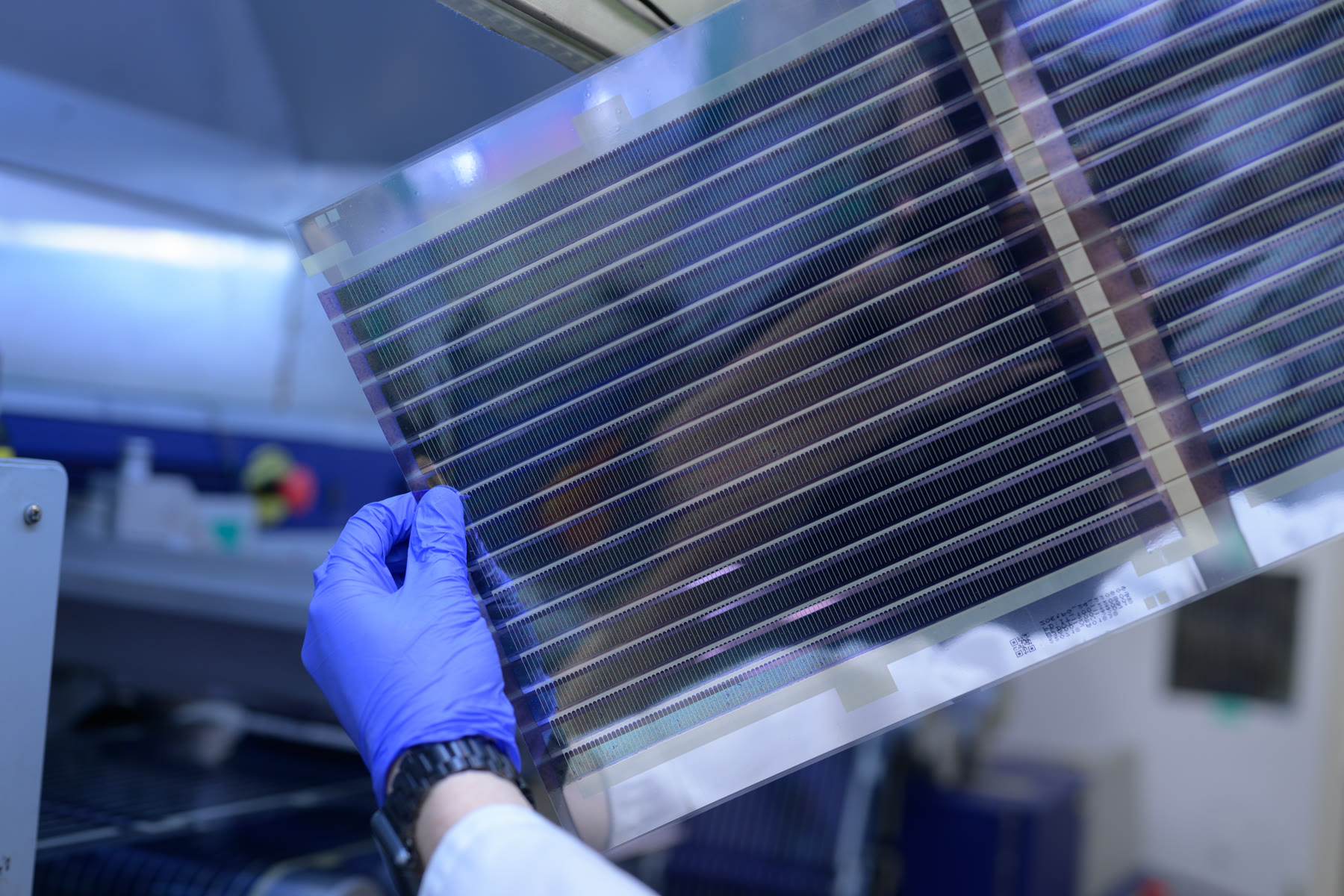
Printing, coating and electrode deposition build the solar cells on flexible film. Patterning connects the cells electrically, and protective barrier films seal the finished device against moisture and oxygen.
C
Testing
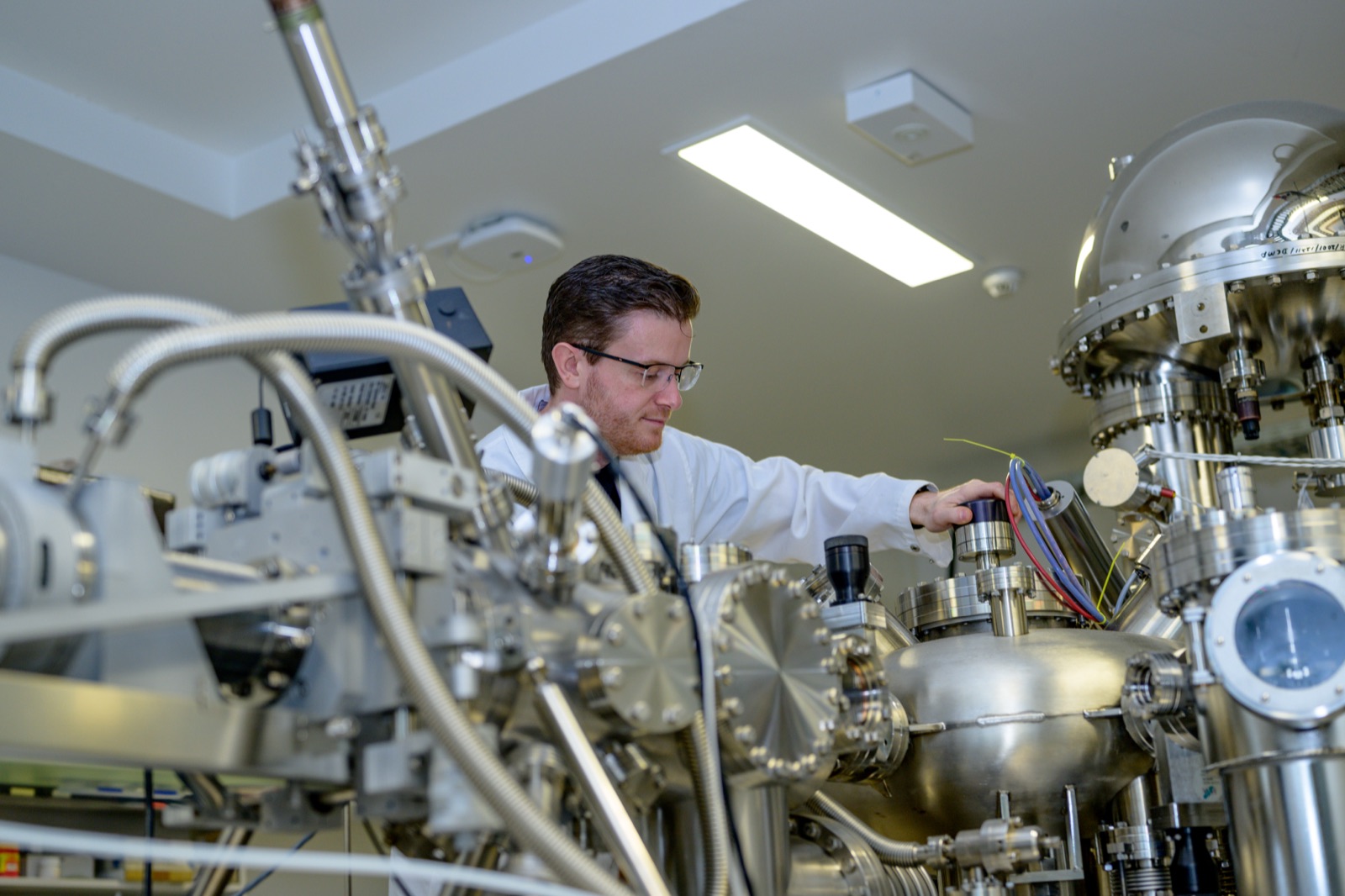
Electrical testing checks performance during manufacture. As manufacturing scales, automated inspection and material traceability will strengthen quality control and support consistent output.
04 A new approach to solar
A new approach to solar. From materials to manufacturing.
Printed Solar opens up a new pathway for clean energy, combining resource-efficient manufacturing, material recovery and greater control over how solar is produced.
Sustainability
Clean energy should start with how it’s made. Printed Solar uses very little material and a low-temperature, low-energy printing process, creating a pathway to a more sustainable energy future.
Recycling
Turning yesterday’s solar into tomorrow’s resources. Our demonstrated recycling process recovers materials, including clean PET plastic, for reuse, creating a pathway towards a circular future for solar energy.
Supply chain resilience
Our proprietary photovoltaic inks and manufacturing processes create an independent pathway for solar production, supporting sovereign manufacturing and more resilient energy supply chains.
05 Where it is made
Expanding our production capacity.
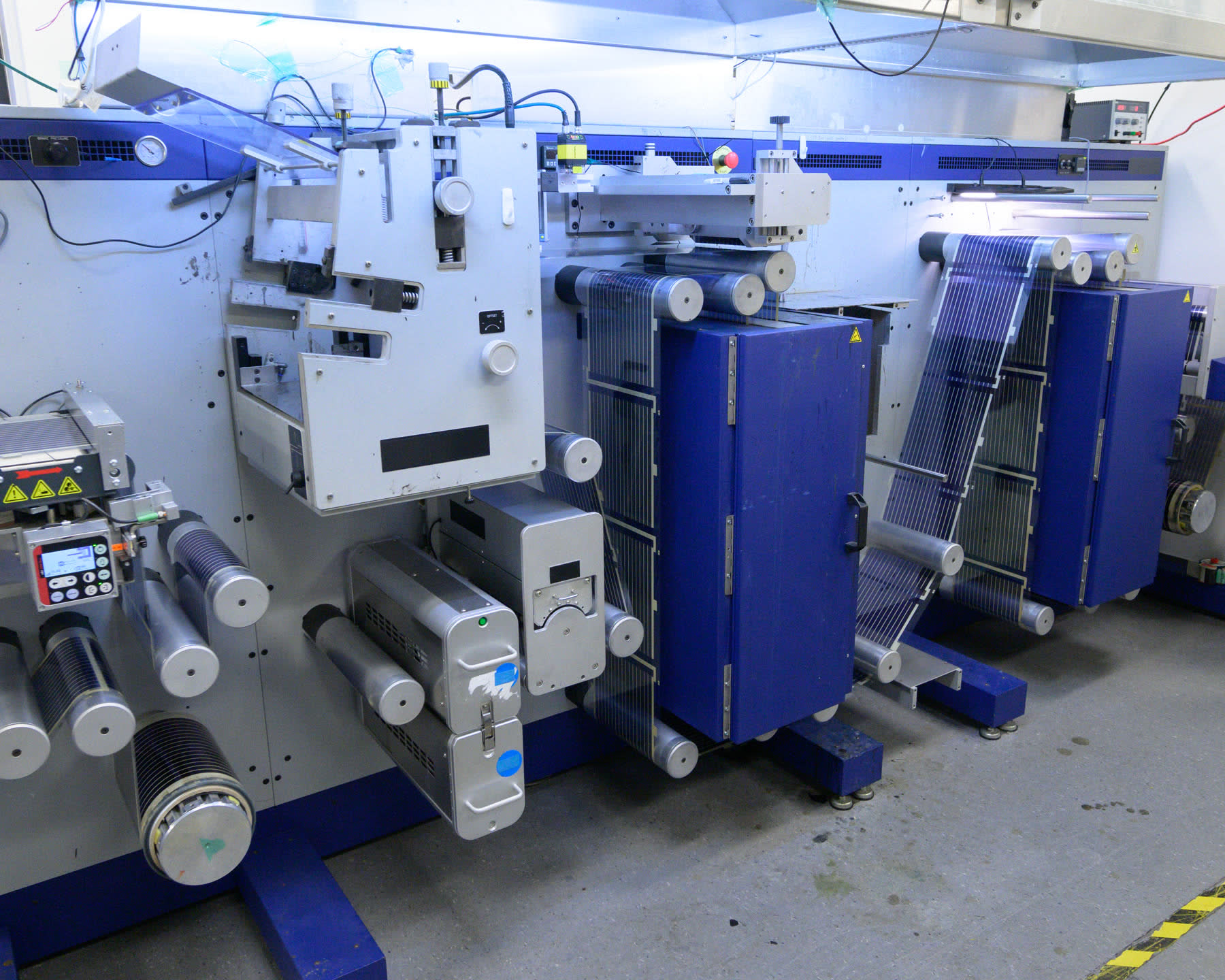
Built on research at the University of Newcastle in Australia, Printed Solar is manufactured using roll-to-roll processes. Kardinia is developing PRINCEPS, a demonstration-scale manufacturing facility, to establish repeatable production, improve throughput and measure product performance, manufacturing yield and cost. It is the next step from pilot production towards commercial manufacture.
Support comes from the NSW Government’s Clean Technology Innovation program and the Australian Government’s Industry Growth Program.
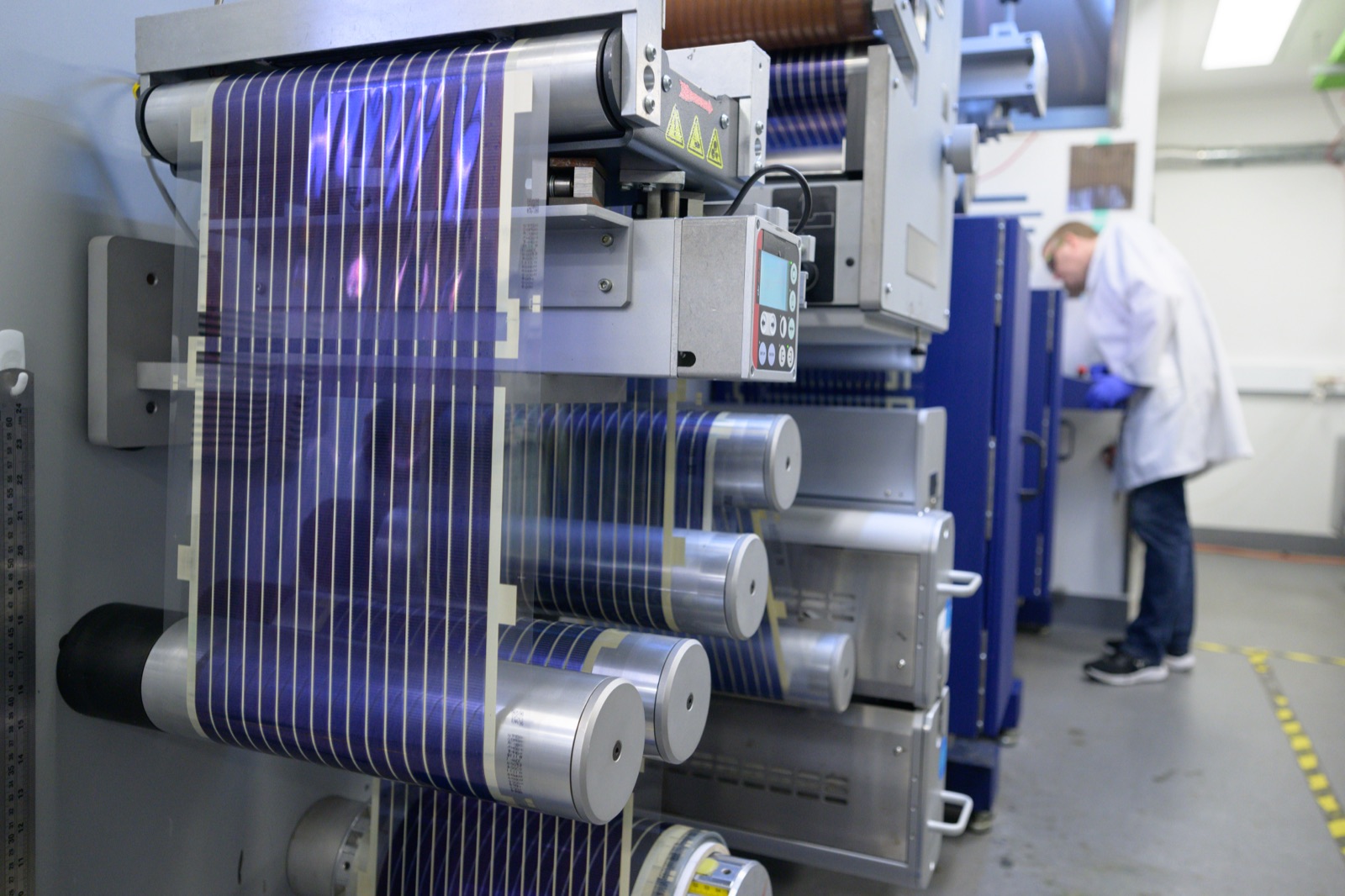
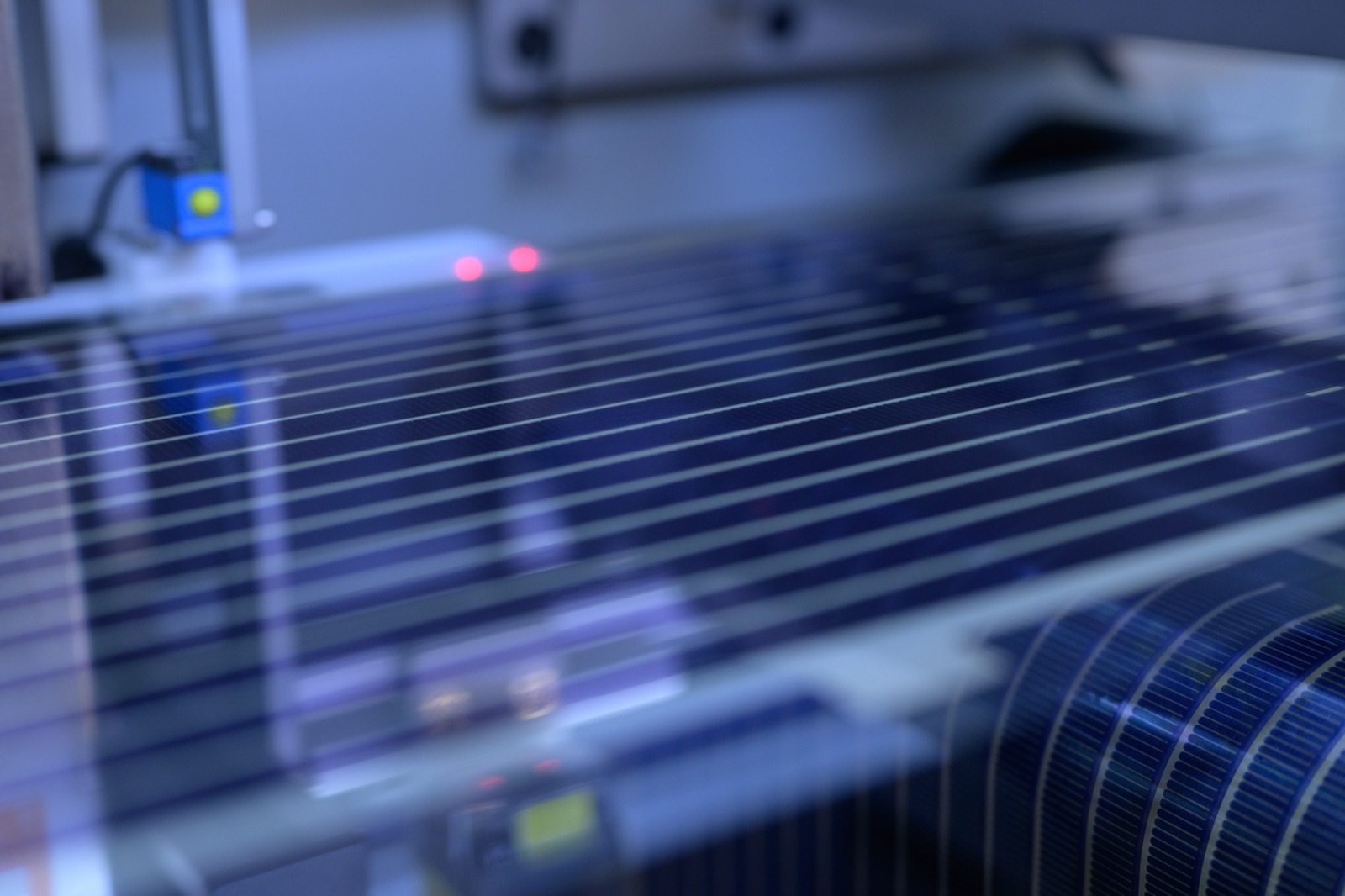
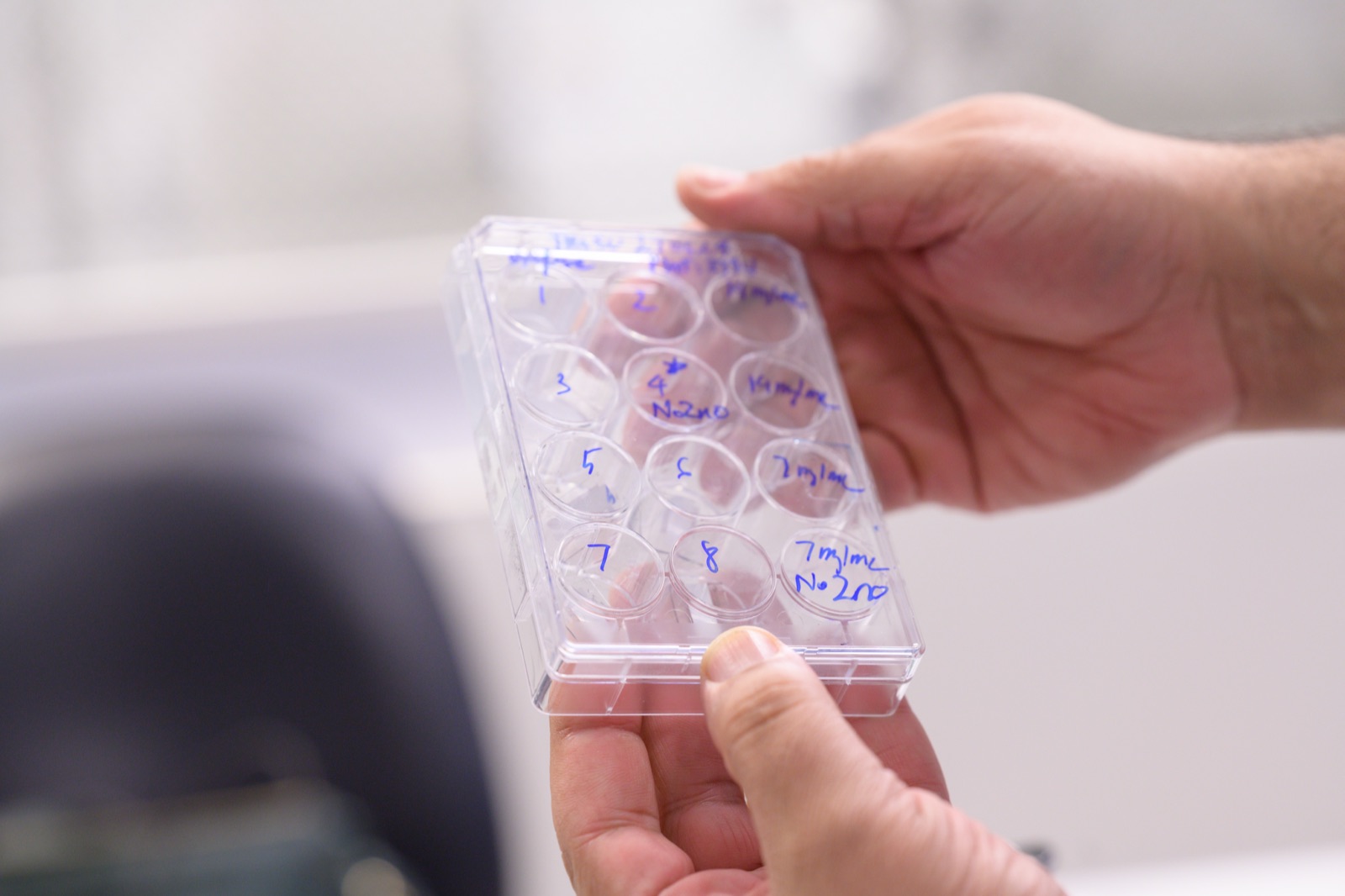
Inside the pilot facility. Photography: Austrade, 2024.
06 Deployment and performance
Deployment and performance.
Supplied in rolls for transport and installation, Printed Solar can be installed for long-term use or packed down and redeployed for temporary projects.
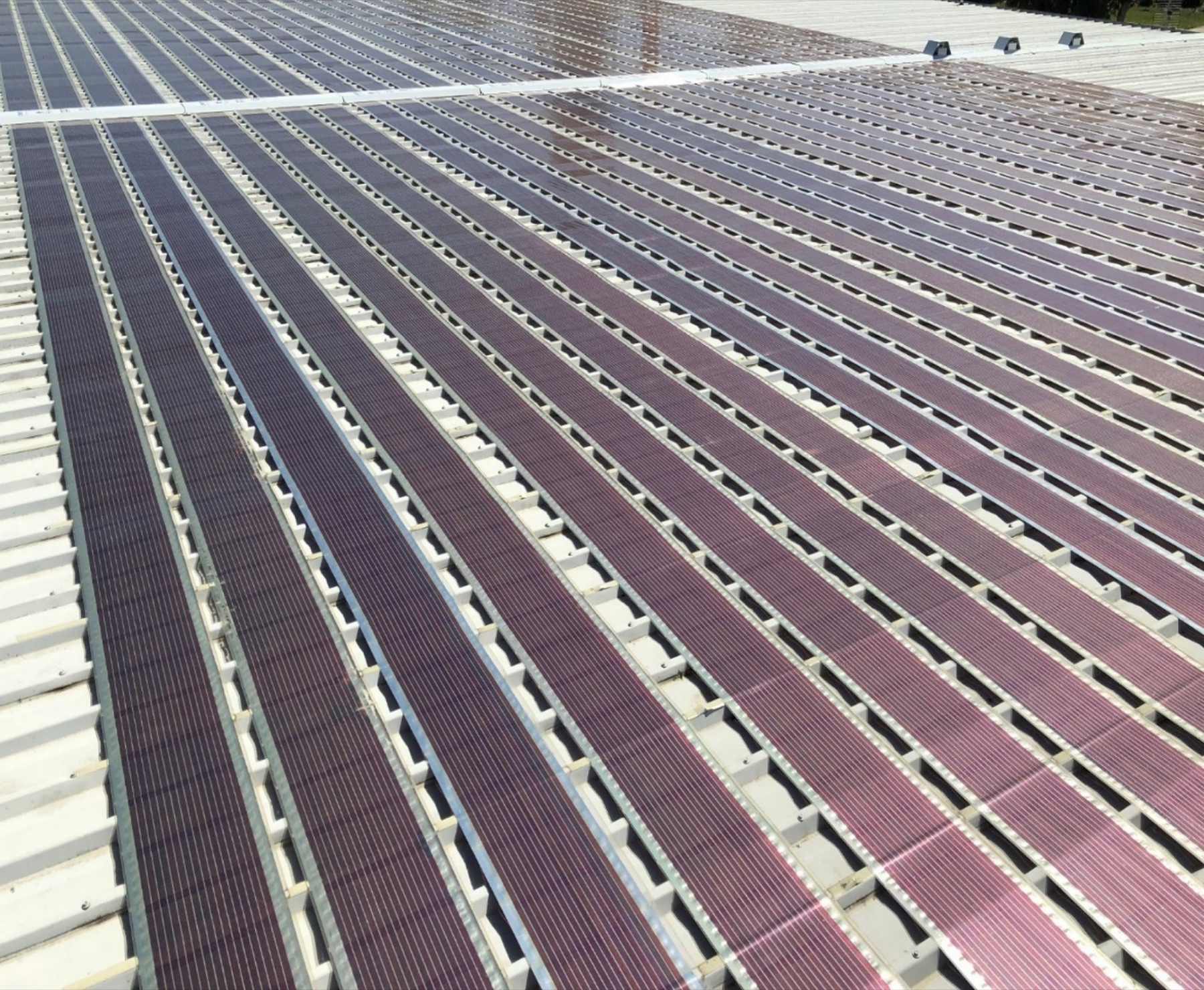
Industrial roof
First commercial-scale installation on a roof with limited load capacity. Case study
2020Curved public canopy
Installed on the curved shade structures at The Canopy in Lane Cove. Case study
2022Charge Around Australia
Printed Solar carried around the continent and deployed repeatedly in the field. Case study
2024–25Stadium world tour
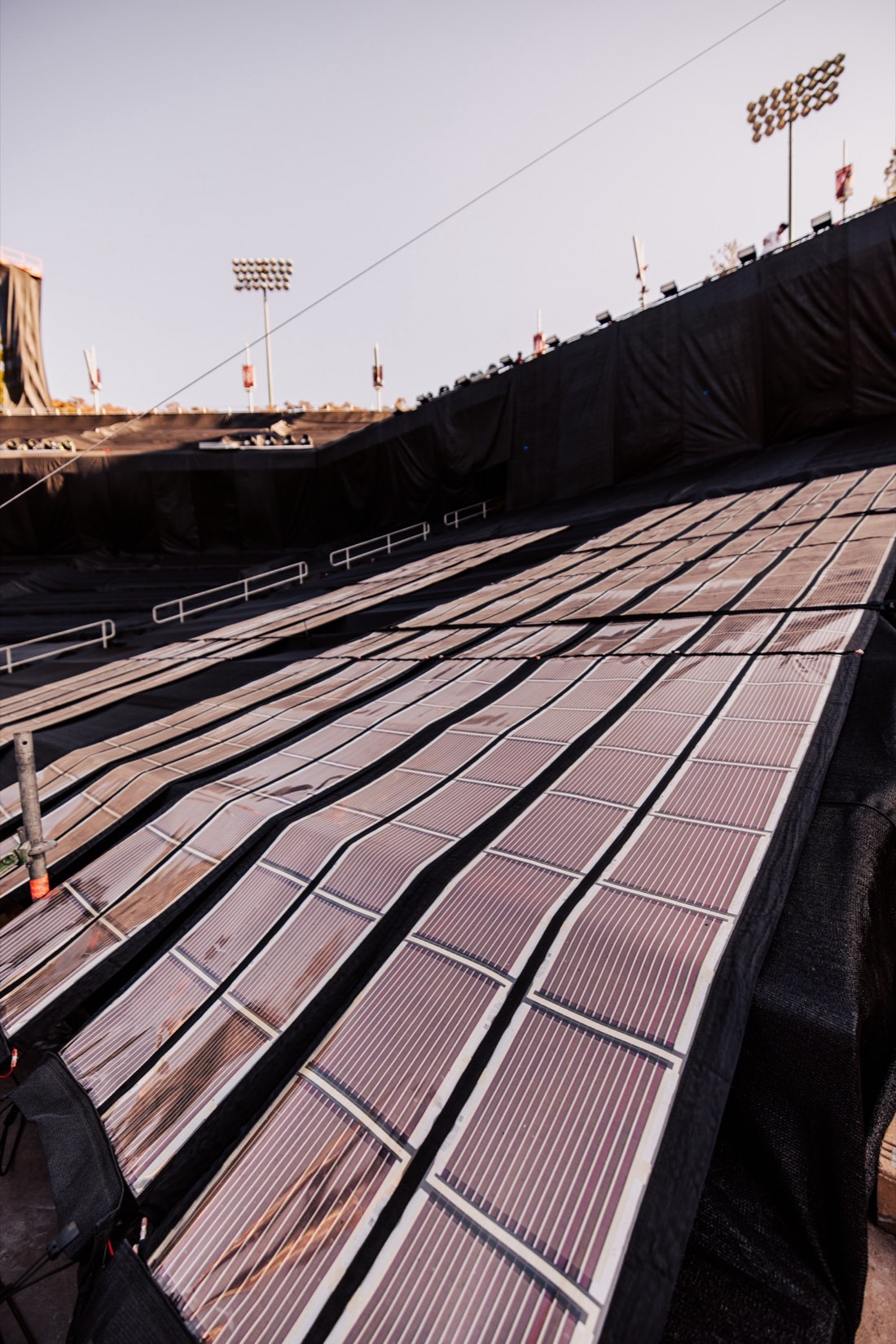
Printed Solar travelled with Coldplay across 18 countries, 29 venues and 91 shows, charging batteries for stage and backstage operations. Case study
Output and service life
Generation One Printed Solar will deliver up to 80 W per square metre, with improved low-light performance and a service life of more than six years, depending on location and project conditions. Development is already underway to improve product performance and extend service life to 10 to 15 years, opening up even broader markets.
Where could Printed Solar work for you?
Tell us about your project, location and energy needs. We can explore your project and share relevant deployment experience.